

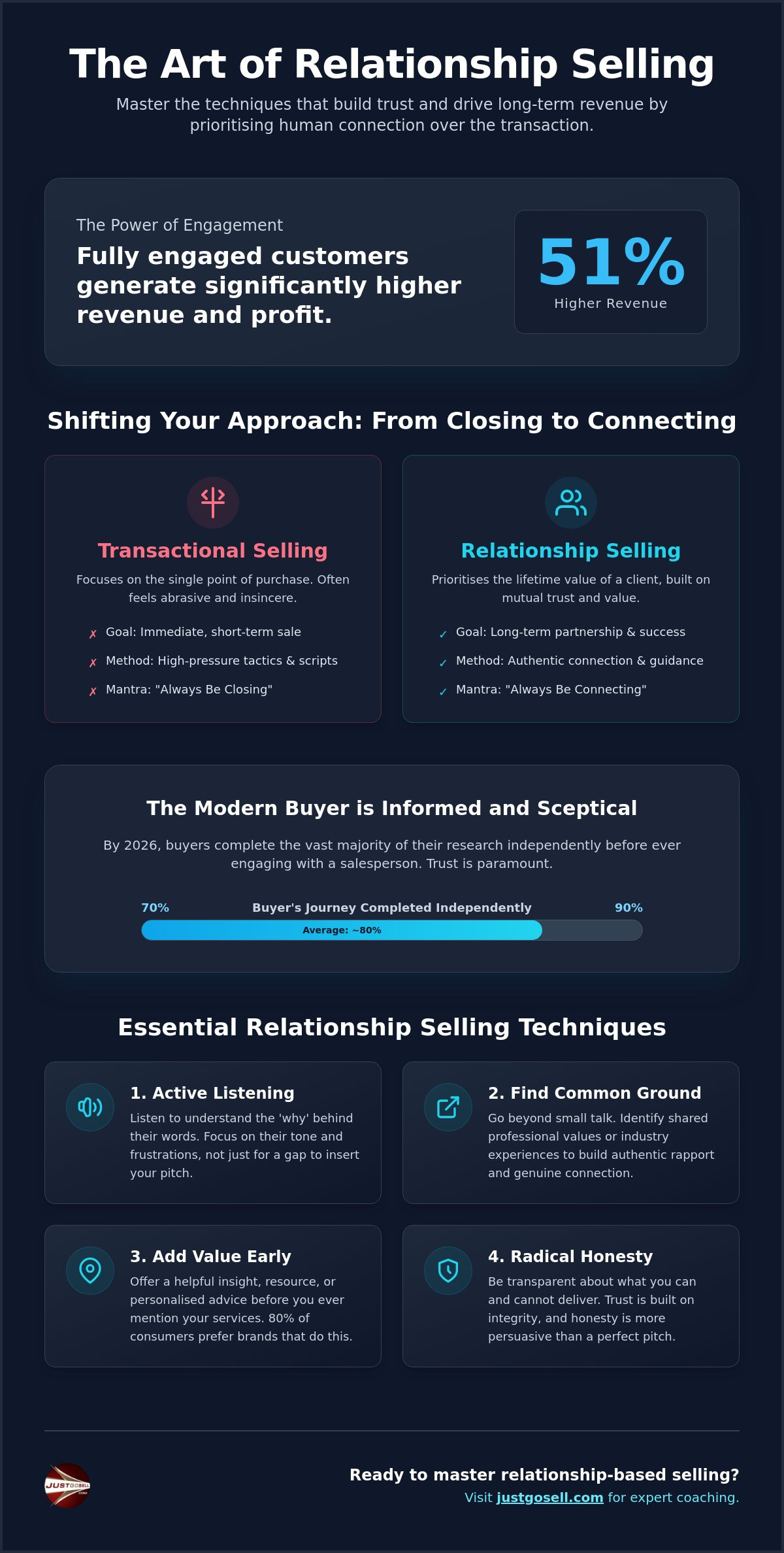
Research from Gallup found that fully engaged customers can generate 51% higher revenue and sales than actively disengaged customers. Most entrepreneurs dread the traditional "hard sell" because it feels abrasive and insincere, yet they struggle to keep their pipelines full without it. The truth is that the most successful professionals don’t rely on rigid scripts or high-pressure tactics; they master relationship selling techniques that prioritise the human being over the transaction.
It’s completely normal to feel a sense of hesitation about sales, especially if you worry about being perceived as pushy or "salesy." You likely want a process that feels natural. It should match your personality rather than feeling like a forced performance. This article will help you move away from aggressive tactics and master the art of building trust-based relationships that lead to consistent, long-term results. We’ll explore how to handle high-ticket discovery calls with confidence and structure your approach to ensure your revenue grows alongside your reputation.
Key Takeaways
- Discover why modern buyers in 2026 are increasingly resistant to high-pressure tactics and how prioritising trust leads to more consistent revenue.
- Master five core relationship selling techniques that help you find common ground and listen for the needs your prospects haven’t yet voiced.
- Learn to distinguish between transactional and relationship-based selling so you can grow your business without ever feeling pushy or insincere.
- Follow a practical framework for client nurturing that focuses on thorough research and authentic rapport-building before you ever mention a product.
- Find the confidence to handle high-ticket calls by embracing non-traditional methods that suit your personality rather than following a generic script.
Understanding Relationship Selling: Why Trust Trumps Transaction
Relationship selling isn’t just a modern buzzword; it’s a fundamental shift in how you view every commercial interaction. Whilst transactional selling focuses on the single point of purchase, these relationship selling techniques prioritise the lifetime value of a client. It’s a long-term strategy built on the foundation of mutual value and deep-rooted trust. When you stop viewing prospects as targets and start seeing them as partners, the entire energy of your sales process changes. The pressure to "perform" vanishes, replaced by a genuine desire to solve problems.
Modern buyers in 2026 are more informed and more sceptical than ever before. According to Gartner, 70% of B2B buyers now prefer a completely digital, self-service buying experience, while 67% prefer an experience without a sales representative. They’ve seen every trick in the book. They can smell a high-pressure "close" from a mile away and it’s a smell that drives them straight to your competitors. By focusing on helping rather than just closing, you provide immense psychological relief for both yourself and your prospect. It feels natural because it is natural. You’re no longer an adversary trying to take their money; you’re an ally helping them achieve a goal.
Your personality is not something you should hide behind a corporate mask. In fact, your individual character is your greatest sales asset. People don’t want to buy from a faceless entity or a robotic script. They want to connect with a human being who understands their fears and aspirations. When you lean into your unique voice, you build a level of rapport that no generic template can ever replicate.
The Core Philosophy: People Buy from People
The human-centric approach to commerce is grounded in the idea that emotional connection often precedes logical conviction. Personal selling has evolved into a consultative discipline where authenticity is far more persuasive than a "perfect" pitch. A polished, rehearsed presentation often creates a barrier, making the prospect wonder what you’re trying to hide. Conversely, a mentor-like warmth allows you to bridge the gap between a beginner’s insecurity and a professional’s mastery. At Just Go Sell, we encourage you to find your own voice rather than changing who you are to fit a rigid industry stereotype.
Moving from "Always Be Closing" to "Always Be Connecting"
The old-school mantra of "Always Be Closing" belongs in the past. It creates a high-stakes environment that triggers defensive behaviour in your prospects. Modern relationship selling techniques replace that aggression with a commitment to "Always Be Connecting." In this framework, you act as a supportive consultant. You’re there to guide, to educate, and to offer clarity amidst the noise of fragmented information. If you’re struggling to make this mental leap, 1-to-1 Sales Coaching can help you dismantle those old psychological barriers and rebuild your confidence from the ground up.
Relationship selling is a long-term commitment to the client’s success that prioritises their outcomes above your own immediate commission.
5 Essential Relationship Selling Techniques for Authentic Connection
Mastering relationship selling techniques isn’t about memorising a new set of clever lines. It’s about shifting your habits to signal that you are a genuine partner rather than a temporary vendor. These methods allow you to build a bridge of trust that makes the eventual transaction feel like a natural next step rather than a forced conclusion.
- Active Listening: Most salespeople listen only to find a gap where they can insert their pitch. True active listening involves hearing the "why" behind the "what." Pay attention to the prospect’s tone and the specific words they use to describe their frustrations.
- Finding Common Ground: This goes beyond trivial small talk about the weather. It’s about identifying shared professional values or similar experiences in your industry. Authenticity is vital; if you don’t actually share a value, don’t pretend that you do.
- Adding Value Early: Research from Epsilon found that 80% of consumers are more likely to purchase from a brand that offers personalised experiences. Provide a helpful insight or a relevant resource before you even mention your services.
- Radical Honesty: One of the most powerful moves you can make is telling a prospect you aren’t the right fit for their specific needs. It feels counterintuitive, but it builds massive credibility. When you do eventually recommend a solution, they’ll know it’s because you truly believe it will help.
- Reliability and Follow-through: This is the "boring" secret to winning high-ticket deals. If you promise to send an email by Tuesday morning, ensure it arrives by Tuesday morning. Consistency is the most basic form of trust-building.
Mastering the Art of the Discovery Call
The discovery call is the foundation of your relationship. Instead of launching into a presentation, focus on asking open-ended questions that start with "How" or "What." This encourages the prospect to lead the narrative whilst you stay present and observant. If you’re looking to refine this specific skill, you might find our guide on Mastering the Sales Discovery Call: 7 Pro Tips particularly useful for your next session.
Adding Value Without Giving Away the Farm
You can position yourself as an expert by providing high-level insights that clarify the prospect’s problem. The key is to distinguish between helpful advice and free consulting. You want to show them the "what" and the "why," whilst keeping the "how" as part of your professional service. Academic research into Trust-Based Relationship Selling confirms that these value-led interactions are the primary drivers of long-term client loyalty. If you’re struggling to find that balance in your own outreach, feel free to reach out for a supportive chat about your strategy.
Relationship Selling vs. Transactional Selling: Overcoming the Fear of Being ‘Pushy’
The fundamental difference between these two worlds lies in your ultimate objective. In transactional selling, the goal is the exchange of money for a product, often with little regard for what happens after the invoice is paid. Conversely, mastering relationship selling techniques means your primary goal is the creation of a durable partnership. You aren’t just looking for a signature; you’re looking for a success story. This shift in focus naturally changes the way you communicate. Instead of a one-way broadcast of features, your interactions become a collaborative dialogue aimed at mutual growth.
Many entrepreneurs avoid sales because they don’t want to be "that" person. You know the one: the pushy salesperson who doesn’t take no for an answer. This fear often leads to inconsistent revenue because you pull back right when you should be leaning in. Here is the relief you’ve been looking for: a relational approach actually reduces sales anxiety for both you and your prospect. When you aren’t desperate for a specific outcome, you can stay calm and curious. This presence is infectious. It allows the prospect to lower their guard because they don’t feel like they’re being hunted.
The long-term financial benefits of this approach are difficult to ignore. Research from Bain & Company found that, in financial services, increasing customer retention by just 5% could increase profits by more than 25%. Also, the value doesn’t stop with retention. Research published in the Journal of Marketing Research, analysing more than 40 million customers, found that referred customers went on to generate around 30–50% more new customers themselves than comparable non-referred customers. By prioritising the person over the deal, you’re not simply creating a customer; you’re potentially creating an advocate, and a referral engine built on something no marketing campaign can manufacture overnight: trust.
The Mindset Shift: Sales as a Service
Reframing "selling" as "problem-solving" is the first step toward professional mastery. If you can genuinely help someone, it’s your responsibility to offer that help. For a deeper look at this internal transition, check out our Essential Sales Mindset Tips for Entrepreneurs and Beginners. Being "pushy" is a result of prioritising your quota over their needs.
Why Transactional Tactics Fail in Modern Business
The "smell of desperation" is a deal-killer that buyers detect instantly. High-pressure tactics might win a single transaction, but they damage your brand reputation amongst your peers and industry networks. In the age of instant social proof, one bad experience can ripple through your community. Building a solid foundation for consistent results requires patience and a commitment to transparency that transactional models simply cannot provide. When you focus on relationship selling techniques, you ensure that your business growth is sustainable rather than a series of one-off wins. For founder-led companies seeking strategic guidance to strengthen leadership and operational performance alongside revenue growth, you can learn more about dedicated consulting support.

A Practical Framework for Nurturing Long-Term Client Relationships
Moving from a mindset of service to the actual mechanics of a sale requires a structured approach. Whilst the previous sections focused on the "why," this framework provides the "how." By implementing consistent relationship selling techniques, you can transform a chaotic pipeline into a predictable stream of high-value partnerships. This isn’t about following a script; it’s about following a sequence of respect and value.
- Step 1: Research and Personalisation. Never go into a call cold. Use LinkedIn to understand your prospect’s recent achievements or challenges. This shows you’ve invested time in them before asking for theirs.
- Step 2: The Initial Connection. Your first interaction should be about rapport. If you start with a pitch, you’ve already lost. Focus on mutual interests to establish a human connection.
- Step 3: The Discovery Phase. This is where you deep-dive into their world. Understand the personal and professional impact of their problems.
- Step 4: The Collaborative Solution. Instead of sending a rigid proposal, build the solution together. This makes the prospect a co-creator of the deal.
- Step 5: The Post-Sale Relationship. The real selling begins after the invoice is paid. This is where you earn the right to ask for referrals; maintaining this connection can be achieved through client appreciation events, where a specialist like Fruitbowl Events Agency can help you create a memorable environment that encourages long-term loyalty.
Personalising Your Outreach Without Sounding Creepy
Mentioning a prospect’s favourite industry topic or a recent post they shared is a brilliant way to show you’re paying attention. It’s about finding genuine connection points that prove you aren’t just another automated bot. I recommend the "Rule of Three": find three unique facts about the person or their business before you reach out. This ensures your message is relevant and grounded in reality. When you mention mutual interests, it bridges the gap between stranger and trusted advisor. Complementing your one-to-one outreach with a strong presence in your community through local sales networking can dramatically expand the number of genuine connections you build each month.
The Power of the Non-Sales Follow-Up
Staying top-of-mind doesn’t require asking "are you ready to buy yet?" every three days. That behaviour triggers the very "salesy" perception we want to avoid. Instead, send a relevant article, a helpful introduction, or a simple "thinking of you" note. These small touches build a solid foundation of trust. Organise your follow-up schedule to ensure no one falls through the cracks. Consistency is what separates the professionals from the amateurs. If you’re ready to build a sales process that feels natural and matches your personality, get in touch to discuss how we can support your growth.
How Just Go Sell Helps You Master Relationship-Based Selling
Mastering relationship selling techniques is rarely a solo journey. Whilst the theory is straightforward, the application often triggers the very insecurities we’ve discussed, from the fear of rejection to the dread of sounding insincere. Myself (Colin Knowles) founded Just Go Sell to bridge this gap, moving away from high-pressure industry stereotypes and towards a mentor-led approach that prioritises your unique voice. Our methods are intentionally non-traditional; we don’t believe in one-size-fits-all scripts that make you sound like a robot. Instead, we help you build a professional foundation rooted in your own individual character.
Sometimes, you need a consultant to look at your specific pitch and help you refine the edges. Our 1-to-1 Sales Coaching provides exactly that. This tailored strategy refinement helps you move from "knowing" the techniques to "doing" them with total confidence during high-ticket discovery calls. It’s about having an innovative guide by your side to help you navigate complex client interactions. We help you bridge the gap between a beginner’s insecurity and a professional’s mastery, ensuring your approach remains authentic whilst driving commercial results.
Start Building Your Sales Foundation Today
If you’re looking for a comprehensive roadmap to mastery, The Ultimate Sales Professional course is designed to be your definitive guide. This flagship curriculum covers everything from the fundamentals of rapport to the nuances of collaborative closing. You’ll gain lifetime access to a wealth of downloadable resources that you can implement immediately to see real changes in your client retention and referral rates. Remember, the goal isn’t to change who you are to fit a script. It’s to find the most effective version of your own voice. You have the potential to succeed; we’re just here to help you find the right structural fundamentals to make it happen.
Transform Your Sales Approach into a Partnership
We’ve explored how shifting from a transactional mindset to one of service can dismantle the psychological barriers that often hold entrepreneurs back. By prioritising active listening and authentic rapport over rigid scripts, you create a sales process that feels natural and sustainable. Implementing these relationship selling techniques ensures that every interaction adds value, turning prospects into long-term advocates for your brand. You don’t have to choose between being successful and being yourself; the two are actually deeply connected.
Founded by myself (Colin Knowles), Just Go Sell is dedicated to helping you overcome sales anxiety and build unshakeable self-belief. We focus on customised methodologies that suit your individual character rather than forcing you into a generic mould. Ready to sell with confidence? Enrol in The Ultimate Sales Professional today to start building the foundation for consistent, trust-based revenue. You already have the unique voice needed to succeed; it’s simply a matter of finding the right structure to let it shine.
Frequently Asked Questions
What is the difference between relationship selling and social selling?
Social selling refers to the digital channels and platforms you use to identify and engage with prospects, such as LinkedIn or "X" . Relationship selling is the underlying methodology and mindset you apply once that connection is made. You might use social media to find a lead, but you use relationship selling techniques to turn that stranger into a loyal, long-term partner through trust and mutual value.
Is relationship selling only for expensive products or high-ticket services?
How do I start a conversation with a prospect without sounding like a salesperson?
The secret is to lead with curiosity and value rather than a pitch. Ask an open-ended question about a specific challenge they’ve recently mentioned online or offer a genuine compliment on a project they’ve completed. By acting as a supportive consultant from the first interaction, you remove the pressure of the "sale" and create a space where a natural professional relationship can grow.
Does relationship selling take longer to close a deal than transactional selling?
The initial rapport-building phase might take more time, but the closing phase is often much faster and more certain. As you’ve already dismantled psychological barriers and addressed fears during the discovery phase, the final decision feels like a natural next step rather than a high-pressure hurdle. This often leads to higher client retention and a better overall return on your time investment.
Can I use relationship selling techniques if I am an introvert?
Introverts often find the most success with relationship selling techniques because they are naturally gifted at active listening and deep observation. You don’t need to be an extroverted "performer" to build a successful sales career. Your ability to stay present and make a prospect feel truly heard is a powerful asset that builds far more trust than a loud, high-pressure presentation ever could.
How do I maintain relationships with hundreds of prospects at once?
You don’t need to have hour-long meetings with everyone to keep a relationship warm. Use a structured system to organise your follow-ups and focus on "non-sales" touches, such as sending a relevant article or making a helpful introduction. These small gestures show you’re still thinking about their success, allowing you to stay top-of-mind amongst a large network without feeling overwhelmed or sounding pushy. Pairing this approach with a consistent local sales networking strategy gives you a reliable stream of warm contacts to nurture over time.
What happens if I spend time building a relationship and they still do not buy?
Every genuine connection you build has value, even if it doesn’t result in an immediate invoice. A prospect who feels respected and understood is far more likely to refer you to their peers or return to you when their circumstances change. Research published in the Journal of Marketing found that referred customers were at least 16% more valuable than comparable non-referred customers and demonstrated stronger retention. So, your investment in the relationship can continue paying dividends long after the original sale, often through opportunities you never expected.
Are sales scripts useful in relationship selling, or should I just wing it?
Rigid scripts often sound robotic and kill the authenticity that is vital for building trust. However, you shouldn’t just "wing it" either, as this can lead to a lack of direction. The best approach is to use a flexible framework that provides a clear structure for the conversation whilst allowing your individual character and unique voice to remain front and centre during the interaction.


Article by
Colin Knowles
Sales Growth Consultant | Sales Director | Author | Founder: JustGoSell
With an extensive background in corporate sales training and team leadership, my role as Sales Trainer and Director at Just Go S.L. revolves around empowering sales professionals to excel. My approach has consistently fostered environments where sales teams surpass targets, thanks in part to my focus on effective sales processes and direct sales techniques.
At the core of my professional ethos lies the commitment to continual development and adaptation of sales strategies to stay ahead in a dynamic market. Through one-on-one coaching, group webinars, and the authorship of "JustGoSell," I have solidified my reputation as a catalyst for transformative sales results and an advocate for sustained sales skill advancement.